The Ultimate Guide to plant Heating Mats: Nurturing Growth from Seed to Sprout
Plant heating mats, often overlooked by casual gardeners, are indispensable tools for serious growers seeking to maximize germination rates, accelerate seedling development, and cultivate thriving plants, especially in colder climates. This comprehensive guide delves into the intricacies of plant heating mats, exploring their benefits, usage, selection, and maintenance.
Why Use a Plant Heating Mat?
The fundamental principle behind plant heating mats is simple: they provide consistent, gentle warmth to the soil, creating an optimal environment for seed germination and root development. This controlled heat mimics the natural warmth of spring and summer, encouraging seeds to break dormancy and young plants to establish strong root systems.
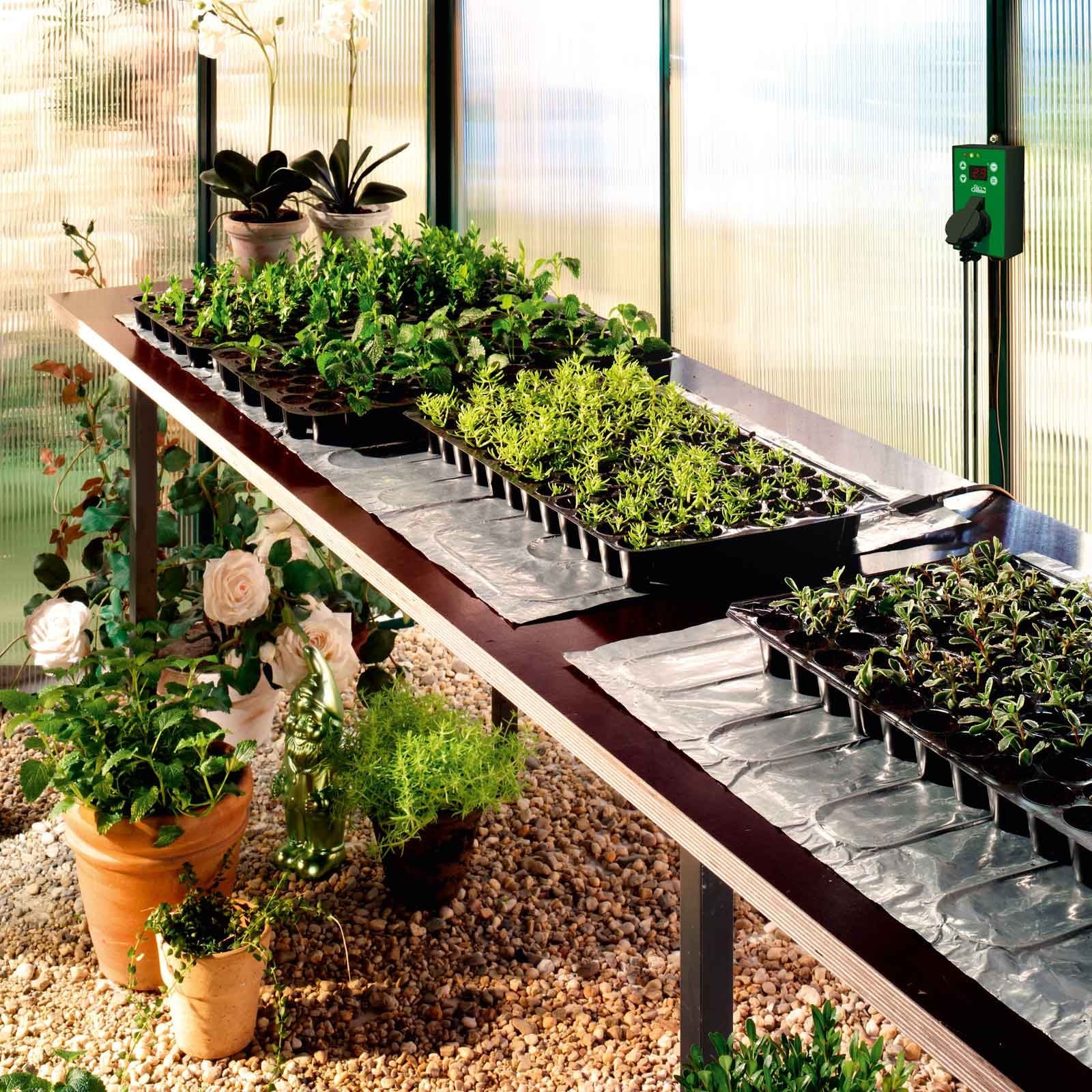
Propagation Heating Mats
Benefits of Plant Heating Mats:
Improved Germination Rates: Many seeds, particularly those of warm-season vegetables and flowers, require specific soil temperatures to germinate successfully. Heating mats provide the consistent warmth necessary to trigger germination, leading to higher success rates.
Accelerated Seedling Growth: Warm soil encourages faster root development, resulting in stronger, healthier seedlings that are better equipped to withstand transplanting and environmental stress.
Extended Growing Season: Heating mats allow gardeners to start seeds earlier in the season, extending the growing season and enabling the cultivation of plants that might otherwise struggle in cooler climates.
Consistent Temperature Control: Unlike fluctuating ambient temperatures, heating mats provide consistent and even warmth, ensuring optimal conditions for seed germination and seedling growth.
Reduced Risk of Dampening Off: Warm soil helps to evaporate excess moisture, reducing the risk of dampening off, a fungal disease that can devastate seedlings.
Propagation of Cuttings: Heating mats are not only for seeds. They are also highly effective in rooting cuttings by maintaining a consistent warm enviroment.
How Plant Heating Mats Work:
Plant heating mats typically consist of a thin, flexible mat containing an electric heating element. When plugged into an electrical outlet, the mat generates gentle warmth that is transferred to the soil or growing medium placed on top. Most mats are designed to maintain a soil temperature that is 10-20 degrees Fahrenheit (5-10 degrees Celsius) above the ambient air temperature.
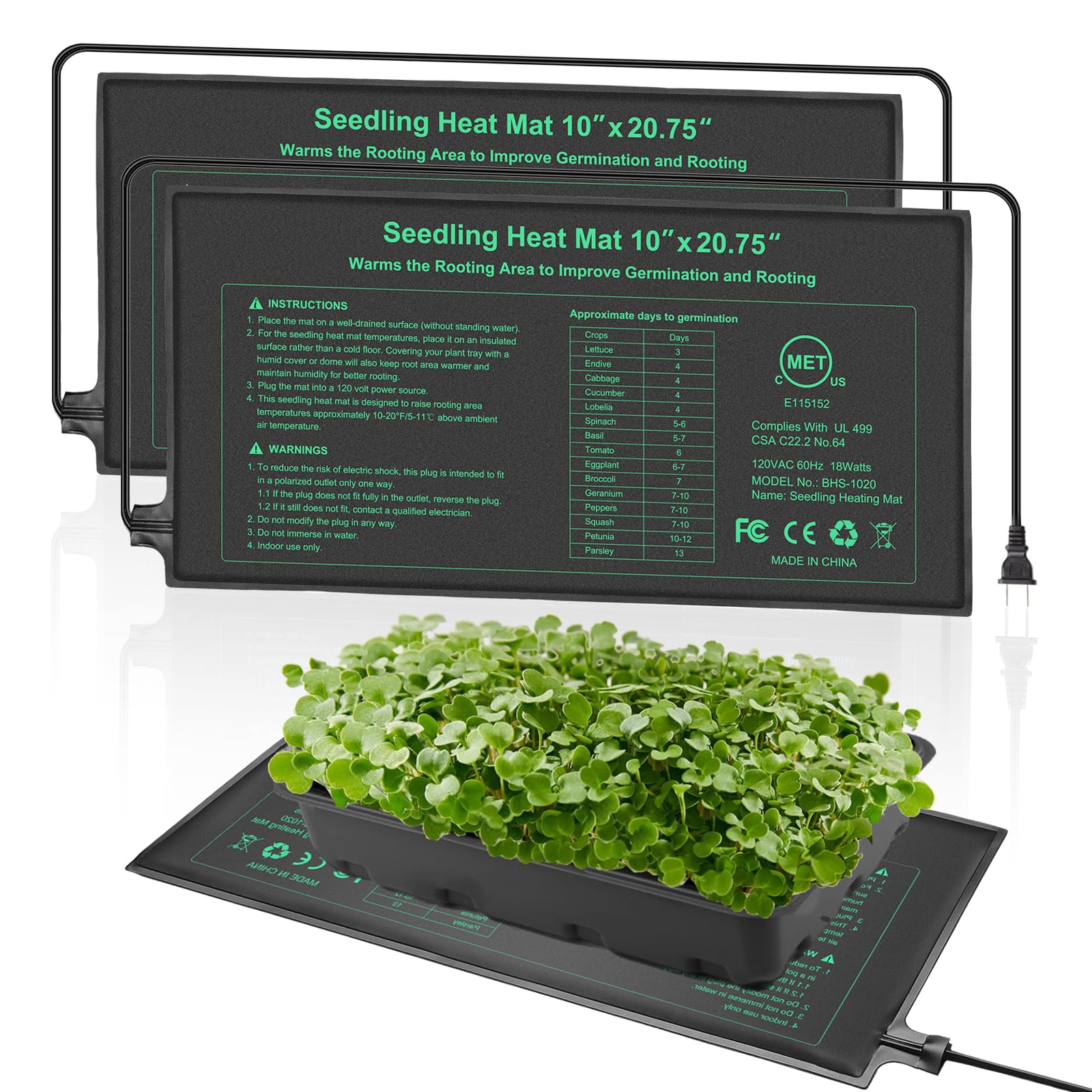
Ohuhu Seedling Heat Mat Heated Propagator, Plant Heating Mat Plant Warm Mat IP Waterproof, W Hydroponic Heating Pad Greenhouse Heating Pad for
Types of Plant Heating Mats:
Standard Heating Mats: These are the most common type, available in various sizes to accommodate different growing setups. They typically provide a consistent level of heat and are suitable for most seed starting and propagation applications.
Thermostatically Controlled Heating Mats: These mats feature a built-in thermostat or an external temperature controller, allowing you to precisely regulate the soil temperature. This is particularly useful for seeds that require specific temperature ranges for germination.
Waterproof Heating Mats: Designed for use in humid environments or with bottom-watering systems, waterproof heating mats offer added protection against moisture damage.
Specialty Mats: Some mats are designed for specific applications, such as reptile enclosures or fermenting.
Selecting the Right Plant Heating Mat:
When choosing a plant heating mat, consider the following factors:
Seedling Heat Mat for Seed Starting, ” x .” Waterproof
Size: Select a mat that is large enough to accommodate your seed starting trays or containers.
Temperature Control: If you are growing seeds that require specific temperature ranges, opt for a thermostatically controlled mat.
Wattage: Higher wattage mats provide more heat, but they also consume more energy. Consider the ambient temperature in your growing area when selecting a wattage.
Safety Features: Look for mats with safety certifications, such as UL or ETL, and features like grounded plugs and built-in fuses.
Durability: Choose a mat made from high-quality materials that are resistant to wear and tear.
Water Resistance: If you plan to use your mat in a humid environment or with bottom-watering systems, select a waterproof model.
Using a Plant Heating Mat:
1. Prepare Your Growing Area: Set up your seed starting trays or containers on a flat, stable surface.
2. Place the Heating Mat: Lay the heating mat on the surface, ensuring that it is flat and free of wrinkles.
3. Position the Seed Trays: Place your seed starting trays or containers on top of the heating mat.
4. Sow Your Seeds: Follow the instructions on your seed packets for sowing depth and spacing.
5. Water Thoroughly: Water the soil or growing medium thoroughly, ensuring that it is evenly moist.
6. Cover the Trays: Cover the seed trays with a humidity dome or plastic wrap to retain moisture and warmth.
7. Plug in the Mat: Plug the heating mat into an electrical outlet.
8. Monitor the Temperature: Use a soil thermometer to monitor the soil temperature and adjust the thermostat, if applicable.
9. Remove the Cover: Once the seeds have germinated, remove the humidity dome or plastic wrap and provide adequate light.
10. Adjust the Temperature: As the seedlings grow, you may need to adjust the temperature of the heating mat or remove it altogether.
Tips for Optimal Use:
Use a Thermostat: A thermostat provides precise temperature control, ensuring optimal conditions for seed germination and seedling growth.
Elevate the Trays: Elevating the seed trays slightly off the heating mat can improve air circulation and prevent overheating.
Monitor Moisture Levels: Regularly check the moisture levels of the soil or growing medium and water as needed.
Provide Adequate Light: Seedlings require adequate light for healthy growth. Use grow lights if natural light is insufficient.
Harden Off Seedlings: Before transplanting seedlings outdoors, gradually acclimate them to outdoor conditions by hardening them off.
Troubleshooting Common Issues:
Seeds Not Germinating: Ensure that the soil temperature is within the optimal range for the seeds you are growing. Check the moisture levels of the soil and ensure that the seeds are receiving adequate light.
Seedlings Dampening Off: Improve air circulation by removing the humidity dome or plastic wrap and ensuring that the soil is not overly moist.
Uneven Heating: Check for kinks or damage to the heating mat. Ensure that the seed trays are evenly distributed on the mat.
Mat Not Heating: Check the electrical outlet and ensure that the mat is plugged in properly. If the mat has a thermostat, ensure that it is set to the correct temperature.
Maintenance and Storage:
Clean the Mat: After each use, clean the heating mat with a damp cloth. Avoid using harsh chemicals or abrasive cleaners.
Store Properly: When not in use, store the heating mat in a cool, dry place, away from direct sunlight and moisture.
Inspect for Damage: Regularly inspect the heating mat for signs of damage, such as frayed wires or cracks in the mat. Do not use a damaged heating mat.
Safety Precautions:
Read the Instructions: Always read and follow the manufacturer’s instructions for using your plant heating mat.
Use a Grounded Outlet: Plug the heating mat into a grounded electrical outlet.
Avoid Overloading: Do not overload the electrical circuit with multiple heating mats or other appliances.
Keep Away from Water: Do not immerse the heating mat in water or other liquids.
Supervise Children and Pets: Keep children and pets away from the heating mat.
Unplug When Not in Use: Unplug the heating mat when it is not in use.
Conclusion:
Plant heating mats are invaluable tools for gardeners seeking to improve germination rates, accelerate seedling growth, and extend the growing season. By providing consistent, gentle warmth, these mats create an optimal environment for seed germination and root development. With proper selection, usage, and maintenance, plant heating mats can help you cultivate thriving plants and achieve gardening success.